When people came to me interested in a home loan, many just wanted to know how much home they could qualify for. Some had an idea where they wanted to live and needed to know whether they could get into that neighborhood. Others wanted a number so they could decide where to start looking. Almost none of them knew which of the home loan types they would end up with.
Almost nobody arrived at my doorstep asking for a specific loan type. They wanted a home and a path to get there.
There are more home loan types than the four in this title. These four are the ones most buyers actually see, and I name the rest at the end.
For now we will discuss conventional, FHA, VA and jumbo and which one is right for you.
How the conversation starts
Most of my clients, at least the early ones, were first-time buyers. I took pride in that work, because they were often afraid of the process and afraid of the commitment. It is the same feeling people have signing up for a 401(k) for the first time. Everybody wonders whether now is the right moment, and whether they can really afford it.
I would open every conversation the same way. Home loan qualification is very simple and primarily comes down to three things.
Income
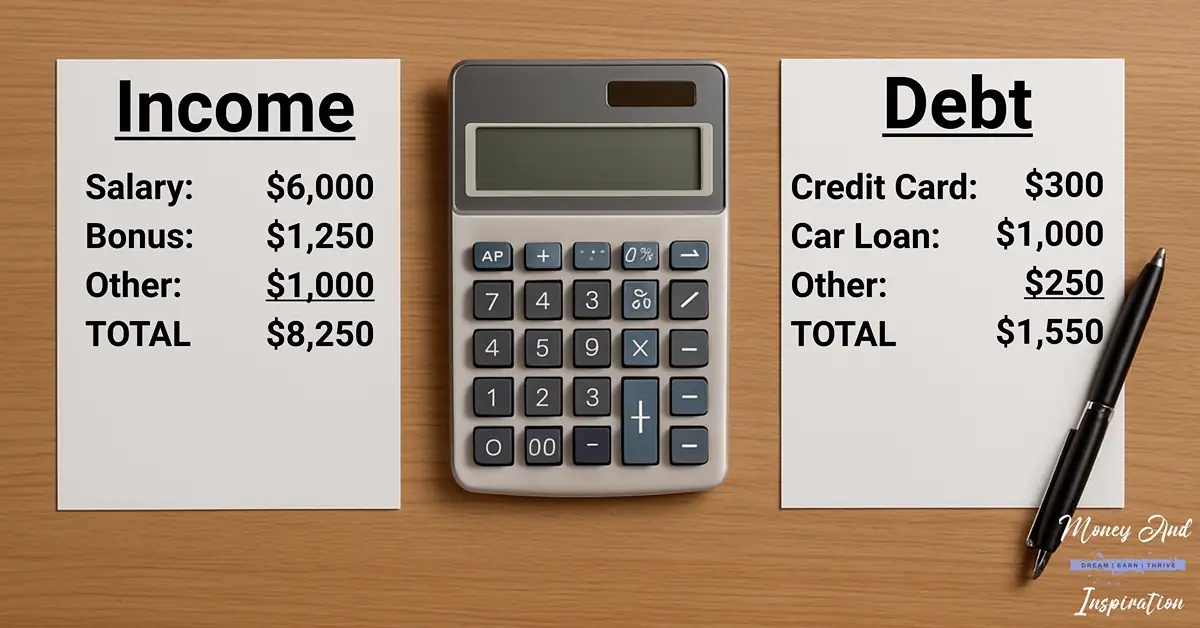
How much gross monthly income do you have to work with? That is the starting point. Are you a W-2 employee or self-employed? If you are a W-2 employee, are you salaried or hourly, and do you have consistent commission or bonus income? Are you self-employed? If you are, how long have you been in business?
If you earn a W-2 salary, that conversation can be fairly straightforward. When you are self-employed, it can become much less straightforward because the income you believe you earn and the income an underwriter can use are not always the same number.
A lender is also looking for history, meaning how long that income has existed in its current form. Changing how you are paid restarts that clock, even when the money goes up. When I transitioned to being a loan officer, this aspect of income impacted me. I had a high paying job at a public company that came with commissions and stock bonuses. I was miserable though, and I have always taught others that if you do not like the path you are on, change it.
So I did. I walked away from that job to take a 100 percent commission job as a home loan officer. That change in careers started a two year clock before I would ever qualify for a home loan. I had no history as a commission only employee. Even if I was making $30,000 a month, and I was not, I could not have used that income to qualify until I had enough time on the job to show an underwriter what I could earn over time.
If you are self-employed
Self-employment is also evaluated for monthly income but there is one important difference that many of my clients assumed incorrectly. Gross wages are used for an employee but a lender does not look at gross revenue for self-employment. If you are self-employed, you own a business so it is the profit, after expenses, that is evaluated. Someone bringing in $150,000 per year with $50,000 of expense is treated the same as someone bringing in $1 million per year with $900,000 of expense. Two years of tax returns is the usual assumption but both Fannie Mae and Freddie Mac allow one year of personal and business returns when the business has been in existence for five years and you have held an ownership share of at least 25 percent for all five years.
This is why the self-employed clients who came to me a year or two out were the ones I could help most. I could tell them the income they needed to show in order to qualify for the home prices they were looking at. Reverse math the process. When the time came to buy, these same clients would share their tax returns before filing that year so I could make sure we were going to qualify.
Down payment
How much cash do you have available for the down payment? Not how much you would like to put down. How much can you actually bring to closing while still having enough money left over to live your life and handle the surprises that come with owning a home?
Beyond the down payment, do you also have the funds necessary to cover closing costs?
Credit report
The credit report served two very important purposes.
First, there is the credit score. The strength of your score dictates which loan types are available to you. A higher score, as you would expect, opens up more opportunities and lower interest. I discuss this at Your Credit Score is Important.
The second purpose for the credit report is the monthly debts that appear there. Car payments, student loans and credit card minimums are added to the new housing costs for the home you are trying to purchase. That total is divided into your income from above to determine your debt-to-income ratio.
There are caveats and nuances to all of this. As an example, if you have a 40 percent down payment, a poor credit score does not harm you nearly as much. The bank sees very little risk because there is already so much equity in the home. If you default, they are confident they can recover what is owed them. Credit still matters, but the pricing penalty attached to an imperfect score can shrink dramatically compared with a borrower trying to finance 95 or 97 percent of the purchase price.
If you have not read The Very Basics of A Home Loan, start there. That post covers what a mortgage is and the core variables that decide whether you are approved: your income, your credit, your loan-to-value and your debt-to-income. I said in that post that there would be others going deeper. This is that post.
The loan type chooses you
As I said above, most people came to me with the goal of qualifying. They provided their information and trusted me to find the right product for them. The right product was usually dictated by the answers to the questions above.
If someone came to me with a credit score below 700 and a small down payment, I was likely looking at an FHA product. Conventional loans penalize you for a lower credit score with a higher rate and a higher cost for PMI.
If I am working with a veteran, the initial thought is a VA loan especially if they have a lower down payment, a lower credit score and are exempt from the VA funding fee. If that same veteran has a large down payment and a higher credit score, I would still take a look at a conventional product.
When the desired home coupled with the available down payment resulted in a loan above conforming loan limits, we had to look at a jumbo product.
These are just a few out of hundreds of examples. The point is that the facts tied to a borrower or borrowers are what ultimately choose the loan type. The product is one that will result in qualification and yield the lowest possible rate.
What this post covers, and what it does not
Everything you will read here is about financing a primary residence……a home you will live in. I will write a separate post for financing investment properties. The process is very similar with different metrics, particularly for down payment, pricing and reserves.
A slight overlap is an aspect of FHA and VA loans that allow two, three and four unit properties so long as you live in one of the units. It is a path to your primary residence as well as the start of your investment property portfolio.
Where rates stand today
The table below is dated. Rates move all the time and currently they are much more fluid than usual. In the two weeks it has taken me to write this post, the 10-year treasury yield has gone up significantly which is driving rates higher. If you want to understand that connection, read Why Your Mortgage Rate Doesn’t Move When the Fed Does. Everything after this section will survive any rate movement.
| As of September 24, 2026 | Rate |
| 30-year fixed (Freddie Mac weekly survey, September 24) | 7.03% |
| Same survey, prior week | 6.95% |
| Same survey, one year ago | 6.30% |
| 15-year fixed (same survey) | 6.42% |
I want to say that the rates above are not necessarily what you would be quoted. Every one of these assumes a strong borrower with strong credit putting 20 percent down. It is a real rate, but as your credit score and down payment fluctuate, so will your rate.
Generally your rate will move every 20 points, meaning a 700 score improves when you get to 720 and improves again when you get to 740. It works the same in reverse, and falling below 700 harms your rate a lot if you are trying to get into a conventional product.
A real rate sheet, one day later
The table above is the Freddie Mac survey published Thursday, September 24. On Friday morning, September 25, a branch manager I used to work with at Guaranteed Rate sent out his daily rate sheet. He runs a very low-cost operation, so these are competitive rates. Here is what was actually being quoted:
- Conventional at or below $832,750: 7.375 percent.
- Conventional above $832,750: 7.625 percent, and that rate includes a half point fee.
- FHA and VA: 6.875 to 6.99 percent, at all loan amounts.
- Jumbo fixed: 7.125 percent. Jumbo adjustable: 6.875 percent.
That is one lender, on one morning, with its own assumptions about credit and down payment. It is not a quote and it is not an advertisement. But look at what it shows.
The Freddie Mac survey said 7.03 percent. One morning later, a very competitive rate sheet had conventional at 7.375 percent. That does not mean rates jumped 0.345 percent overnight. It shows the difference between a national survey and the rate sheet a borrower might actually encounter when it is time to lock a loan.
Crossing $832,750 into high-balance conforming cost a quarter point in rate that morning, and the 7.625 percent rate also came with a half point fee. Historically, paying points is optional to lower a rate. On this rate sheet, a half point fee was required just to obtain the high-balance rate. That is why the loan amount can matter even when both loans are still conforming.
FHA and VA were both cheaper on this particular day, and jumbo fixed at 7.125 percent beat a high-balance conventional at 7.625 percent. Most people assume government loans cost more and jumbo costs the most. That is not always true.
Four primary home loan types
We have finally made it to the four loan types for discussion: conventional, FHA, VA and jumbo.
One thing before the four, because this confused me when I started doing loans. You will read that conventional loans stop at 36 or 45 percent debt-to-income and that VA wants 41 percent. Those numbers are real, but they do not tell you how most borrowers are actually approved.
In practice, nearly every conventional and FHA file runs through automated underwriting, and automated underwriting can approve borrowers above those textbook ratios. VA also looks at more than a single debt-to-income number, with residual income playing an important role.
At the company where I originated loans, I could not even submit a file to my underwriting team without an automated approval in hand. Manual underwriting exists, but in all my years doing home loans, I never had a manually underwritten file.
| Conventional | FHA | VA | Jumbo | |
| Down payment | 3% to 5% minimum | 3.5% at 580+ | None | 10% to 20% or more |
| Debt-to-income | Up to 50% through automated underwriting | Often into the low 50s with automated approval | No fixed maximum, residual income matters | Often 43% or lower, varies by lender |
| Mortgage insurance | PMI below 20% down, can be removed | MIP, life of loan under 10% down | None, funding fee may apply | None |
| 2026 loan limit | $832,750, up to $1,249,125 in high-cost areas | $541,287, up to $1,249,125 in high-cost areas | No loan limit with full entitlement | Above the conforming limit |
| Who it fits | Solid credit, within the limit | Less cash or a lower score | Eligible veterans | A loan above the limit |
1. Conventional
What tends to push you here: stronger credit and a loan amount within the conforming limits (see below).
Conventional simply means the loan is not backed by a government program like FHA or VA. Most conventional loans are also conforming, which means they follow Fannie Mae and Freddie Mac rules, including the loan limit. Go above that limit and the loan is still conventional, it is just no longer conforming. That is where a jumbo loan begins.
Conventional is usually the starting point for a borrower with solid credit. Because a conforming loan is written to agency standards, it can be readily sold into the secondary market, which helps keep pricing competitive.
- Down payment as low as 3 percent for some buyers, though 5 percent is more common. At that level you had better be strong everywhere else.
- Debt-to-income up to 50 percent through automated underwriting.
- Private mortgage insurance if you put down less than 20 percent. The stronger your credit score the less this will cost you and pricing gets better with every 5 percent down. This means PMI pricing for 10 percent down is better than 5 percent down but 12 percent is generally no better pricing.
- 2026 conforming loan limits: $832,750 in most counties, up to $1,249,125 in high-cost areas. Los Angeles County is at the ceiling. Most of South Carolina where my family owns property is at the baseline.
How PMI ends
An important fact about conventional loans is that the PMI can end. For many conventional loans, you can generally request cancellation when the scheduled principal balance reaches 80 percent of the home’s original value, subject to the federal requirements and your servicer’s rules. If you do nothing, PMI generally terminates automatically when the scheduled balance reaches 78 percent of the home’s original value, assuming you are current. The point is that PMI is not forever.
I do not want to go off on a tangent too much but there is also a path out of PMI via a refinance. If the value of your home has increased significantly or you have made improvements, that might help eliminate PMI in a situation where you refinance……generally a rate and term refinance versus one where you take cash out and increase the loan amount.
2. FHA
What tends to push you here: a smaller down payment, a weaker credit profile or a file that becomes expensive or difficult under conventional pricing.
FHA is insured by the Federal Housing Administration. This loan is in existence for borrowers who may not fit as comfortably into conventional financing. It is a genuinely good program and I put plenty of people into these loans.
- 3.5 percent down with a credit score of 580 or higher, and 10 percent down between 500 and 579.
- Debt-to-income can reach into the low 50s with automated approval.
- Upfront mortgage insurance premium of 1.75 percent of the loan amount, usually financed into the balance. This is one of the big downsides of an FHA loan but this fee helps fund the program allowing families into homes they might not otherwise be able to qualify for.
- Annual mortgage insurance premium (MIP) of 0.55 percent with less than 5 percent down and 0.50 percent with 5 percent or more down on a typical 30-year FHA loan, paid monthly. MIP is the FHA version of PMI but make sure you read below.
- 2026 loan limits: $541,287 in most counties, up to $1,249,125 in high-cost areas. Higher limits apply to two-, three- and four-unit properties.
FHA MIP does not work like PMI
FHA mortgage insurance is not PMI, and it does not behave like PMI.
If your loan-to-value at origination is above 90 percent (i.e. your down payment is less than 10 percent), the annual MIP runs for the life of the loan. Not when the balance falls to 80 percent of the original value. Not at 78 percent. The life of the loan.
Put 10 percent or more down and the annual MIP will automatically end after 11 years.
That rule has been in place since June 2013, and it is one reason I often thought of FHA as a bridge. It gets you into the house with the cash and credit you have today, and you may be able to refinance into a conventional loan later if you build the equity and credit profile to make that worthwhile.
I am not telling you to avoid FHA. It is a great opportunity if you need it. It can be the difference between owning a home and renting. Just understand the differences.
The FHA multi-unit door
FHA can finance a two-, three- or four-unit property at that same 3.5 percent down, provided you live in one of the units. You occupy one unit and rent the others. I write about my personal regret this was not my first move at a young age in Duplex – The Power of Two.
With one loan, you become a home owner and a landlord. And if you think you would never qualify, the beauty is that you get to use rental income from the other unit(s) to help qualify. For an owner-occupant without VA eligibility, it is one of the cheapest ways I know to get into rental property. Conventional financing can now go as low as 5 percent down on an owner-occupied two-, three- or four-unit property, but FHA can still go to 3.5 percent.
Two things to know before you chase it. A duplex is the easiest path utilizing FHA. A triplex and a fourplex come with more stringent requirements. Once you move past a duplex, FHA applies a self-sufficiency test to three- and four-unit properties. The math has to math or it is not happening. And the occupancy requirement is real.
The rest of it, including how the rental income is counted and what the self-sufficiency test actually measures, is a post of its own so stay tuned.
3. VA
What pushes you here first: eligibility.
If you are eligible for VA financing, it deserves to be part of the conversation immediately. It was one of the most under-used loan programs I worked with.
- Zero down payment.
- No monthly mortgage insurance at all.
- No set debt-to-income cap. VA uses 41 percent as a guideline, but residual income is the real test, which is why a VA file can pass where a conventional file would not.
- No loan limit for a borrower with full entitlement, though lenders set their own ceilings.
- Two, three and four unit properties are allowed if you occupy one unit. Zero down on a fourplex is a real possibility utilizing this product.
- Counting the rent from the other units is the harder part. If you need that rent to qualify, lenders generally want about six months of full payments in reserves and evidence that you can successfully manage the rental units, which can include using a property manager. If you qualify on your own income, that does not apply.
- A one-time funding fee instead of mortgage insurance: 2.15 percent for first use with less than 5 percent down, 3.30 percent for subsequent use. The fee drops to 1.50 percent with 5 percent down and 1.25 percent with 10 percent down. An interest rate reduction refinance carries 0.50 percent.
- Veterans receiving VA disability compensation at any rating are exempt from the fee entirely. So are surviving spouses receiving DIC and Purple Heart recipients on active duty.
The funding fee replaces mortgage insurance
I think there is a lot of confusion about the VA funding fee. It is not mortgage insurance stacked on top of the loan. It replaces mortgage insurance. An FHA borrower pays 1.75 percent upfront and then keeps paying 0.55 percent a year, potentially forever. A first-use VA borrower pays 2.15 percent once and never pays a monthly insurance premium at all.
Compare the upfront numbers alone and FHA looks cheaper. Compare what you actually pay over the years you own the house and it is not close. And an exempt veteran pays nothing upfront and nothing monthly.
If you are eligible make sure you let your loan officer know.
4. Jumbo
What pushes you here: the loan amount.
Once the loan exceeds the applicable conforming limit, you are in jumbo territory. That does not make it a bad product. It just means you have moved outside what Fannie Mae and Freddie Mac will purchase and this is your path.
I used to describe jumbo as the Wild West of home loans. With conforming conventional loans I explained above, as well as FHA and VA loans, there is a rulebook behind the loan. Jumbo is different. Each institution or investor can create its own underwriting guidelines, so the rules can change depending on where you take the loan.
- Down payments are often 10 to 20 percent, and sometimes more.
- The debt-to-income ratio is often held around 43 percent or lower, though it can vary considerably by lender.
- Higher credit scores are expected.
- Cash reserves after closing are very common, often range from six to twelve months. This means that after covering the down payment and closing costs, you need enough cash or cash equivalents to cover a specified number of months of your housing expense: mortgage payment, property taxes, insurance and HOA/POA dues, if applicable.
- Mortgage insurance is uncommon. Instead, lenders generally protect themselves by requiring more equity, stronger credit and more money left over after closing.
Why the lowest rate may not be available to you
Those lender-by-lender rules create another potentially big difference: the rate you can actually get.
With a conforming loan, lenders are largely underwriting to the same agency standards, so if one lender has the best pricing on the day you lock, there is a good chance you can take advantage of it.
Jumbo does not work quite that way. The lender with the lowest jumbo rate may also have underwriting requirements you cannot meet. Chase might have the best rate on the day you want to lock, for example, but that does not mean you qualify for Chase’s jumbo program. If you have six months of reserves and the lowest-priced lender requires twelve, its rate does you no good. You may have to use another lender with a slightly higher rate whose guidelines fit your file.
That was the Wild West part of jumbo lending. You were not just shopping for the best rate. You were shopping for the best rate among the lenders whose rules you could actually meet.
Fixed or adjustable is a separate decision
One last distinction because it causes confusion. Fixed versus adjustable is not a fifth loan type. It is a separate decision about how the interest rate will behave after you have figured out whether the loan itself is conventional, FHA, VA or jumbo.
The same is true of a 15-year versus a 30-year mortgage. That is the length of the loan, not the type of loan. I discuss this at Breaking Down the Mortgage Debate: 15-Year vs. 30-Year. Adjustable rates deserve the same treatment, so I will leave that debate for another post.
The home loans I left out, and why
The four loan categories discussed in this post cover a large share of the owner-occupied purchase decisions most readers will face. They do not cover everybody so I will briefly mention some others.
USDA loans can provide zero-down financing in eligible rural and some suburban areas, subject to location and income requirements.
Bank-statement and other non-QM loans can be very important for borrowers who do not fit neatly into traditional underwriting, particularly self-employed borrowers whose tax returns do not tell the same story as their actual cash flow. These loans deserve a separate discussion because the underwriting, pricing, down-payment requirements and lender differences are their own world.
Physician loans are another niche product, designed for doctors whose income potential may be strong even when student debt, limited savings or the early stage of their career makes a traditional mortgage less straightforward. I funded one in my years doing loans, which tells you something about how often they came across my desk.
Down-payment-assistance and state housing-finance programs can sometimes sit alongside conventional, FHA, VA or other financing. Ironically, I often found these loans harder to qualify for, not easier. The assistance can bring another layer of income limits, credit requirements, debt-to-income limits and other program rules on top of the mortgage itself. Because those rules vary so much by program and location, they are better treated separately than presented as another universal loan type.
Loans that solve a different problem
Construction and renovation loans, including FHA 203(k), solve the problem of buying or creating a home that needs substantial work.
Reverse mortgages solve a completely different problem: accessing home equity later in life. I gave them a fair hearing in House-Rich, Cash-Poor in Retirement and also plan a separate post.
Investment properties open up another set of choices. Conventional loans can finance investment properties, but investors may also encounter DSCR loans, portfolio lending and hard money, where the property, the borrower and sometimes the investment itself are evaluated differently.
Those are not meant to be only footnotes to this post. Each one is its own subject and deserves more attention than I can give it here.
Find the loan that fits
Start with your situation, not the loan type. If you have solid credit and are buying within the applicable conforming limit, conventional is usually the starting point. If you put less than 20 percent down, understand the PMI rules and how it can eventually end.
FHA can assist if you have less cash and/or need a more forgiving credit profile, but the mortgage insurance is different than conventional PMI. If you are considering a duplex, triplex or fourplex that you will occupy, definitely talk to your loan officer about a path using FHA.
If you are eligible for a VA loan, absolutely start here. Zero down, no monthly mortgage insurance and the ability to finance up to four units while occupying one make it a program worth understanding before you look somewhere else.
Jumbo begins when the loan exceeds the applicable conforming limit. That is the Wild West: underwriting becomes more lender-specific which means you are shopping lender guidelines along with shopping the rate.
Fixed or adjustable and 15 years or 30 are separate decisions. They describe how the loan works, not which of these loan types you have.
There is no reason to decide which loan you want before someone has looked at your income, credit, available cash and the property you want to buy. Those facts will usually narrow the choices considerably.
Know which loan you are getting, what it will cost upfront and each month, and which of those costs can change or go away over time.
Start investing. Stay consistent. Give your money time to grow. Cheers!
Christopher