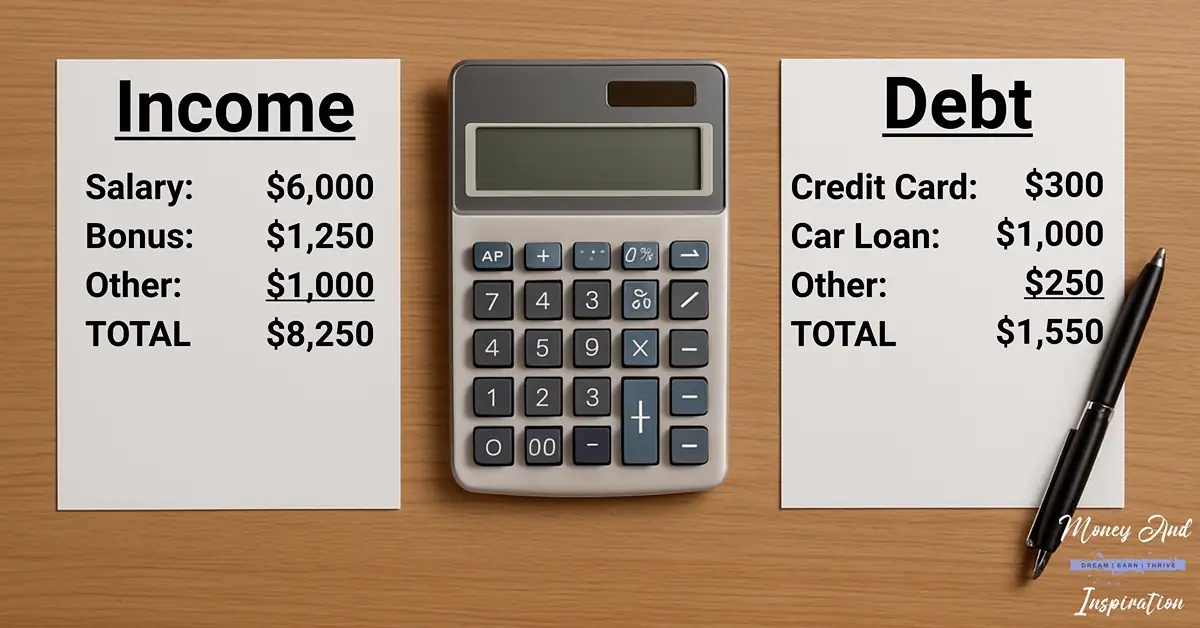
As I discussed at The Very Basics of a Home Loan, Debt-to-Income (DTI) is one of three important criteria in qualifying for a home loan. Credit Score and the amount you are using as a downpayment are the other critical factors. As a reminder, the amount you are using as a downpayment is what determines the Loan-to-Value (LTV) ratio.
Over the years, I encountered many borrowers who assumed they were fine to purchase a home because they made plenty of money. Well, income is important but how much of that is left over after your monthly debt payments is very important. This is where DTI enters the picture.
What Is Debt-to-Income Ratio (DTI)?
Debt-to-Income Ratio compares your total monthly debt payments to your gross monthly income. It expresses this as a percentage and this is what lenders utilize to determine how much mortgage, if any, you can afford.

The point of the ratio is to make sure you don’t take on a house payment that puts you in harm’s way. To be successful with your new home purchase, you need to have cushion between your income and all known debt.
Different loans have different requirements for DTI. As mentioned at The Very Basics of a Home Loan, Jumbo Loans have tighter restrictions than a conforming loan. FHA and VA loans generally allow you to go to 50% or higher under certain conditions but I want to focus on conforming loans. These operate under rules set by Fannie Mae and Freddie Mac and, with good credit, allow a DTI of up to 50%. The key here is you need to have strong credit. If you have a weaker credit score, you likely will not be allowed to go to a 50% DTI.
I want to keep all of this information easy to understand but I feel the need to explain the term Automated Underwriting System (AUS). Most mortgage loans these days are evaluated using this system. Your loan officer has a file with all your data. That data is uploaded; the data is evaluated and a decision on your loan is made. It is this system that allows borrowers with a strong credit profile to go up to a 50% DTI. If you simply google the required DTI for a Fannie Mae loan, you will likely find the answer to be 36% or a range from 36-45%. This is when you are not utilizing AUS!
What Counts as “Debt” in DTI?
Now that we know what Debt-to-Income is: What counts as debt?
Generally speaking, if it shows up as a payment on your credit report, it counts as monthly debt in the DTI calculation. Additionally, all of the monthly costs attached to the new home you are trying to buy counts as debt.
- Credit Cards: the minimum monthly payment. Note, even if you pay off your credit card every month, you will have a minimum payment on your credit report because there is always a balance. At the point where you pay off your credit card bill, you have likely continue to use it. This came up a lot when doing home loans so I want you to be aware.
- Auto loans/leases
- Student loans
- Personal loans
- Any mortgages to other properties you own
- Alimony or child support
- PITI for the new home which includes:
- Principal
- Interest
- Property taxes
- Homeowners insurance
- HOA/POA dues, if applicable
- Private mortgage insurance (PMI), if applicable
Callout: A quick caution: some credit score tools offer to improve your credit score. One way they do this is by encouraging you to add recurring bills, like your cell phone to your credit report. While this may improve your score, this bill now shows up on your credit report and counts as debt for DTI calculations.
Simple Examples
We talked about some examples above but I thought I would provide you a few more:
Example 1: Buyer With Low Debt (Strong Position)
Monthly income: $7,000
Car: $280
Credit cards: $75
Student loan: $200
New mortgage (PITI): $2,300
DTI = ($280 + $75 + $200 + $2,300) ÷ $7,000 = 40% (Very Likely Approved)
Example 2: Buyer With High Debt (Weak Position)
Monthly income: $7,000
Car: $700
Student loan: $650
Credit cards: $200
Personal loan: $450
New mortgage (PITI): $2,300
DTI = ($700 + $650 + $200 + $450 + $2,300) ÷ $7,000 = 61% (Will not qualify for a conforming loan)
A Big Mistake To Avoid
This may sound obvious to most of you but I have witnessed this mistake. Do NOT take on a lot of debt while in the home loan process.
Usually about 7-10 days after entering the home loan process, you will receive a decision. For conversation, let’s assume you are approved. You are excited and now do the other things that go along with buying a home; inspections, negotiations, obtain insurance, etc. What you should not do is go buy a new car unless your loan officer tells you there is a lot of room to spare. Your loan approval is conditional. That new car will show up and DTI will be recalculated. A new $600 car payment can significantly impact your home buying power. True story: a borrower in my office bought a Ferrari right in the middle of his home loan process.
How to Lower Your DTI
Above we made the assumption your loan was approved. Now let’s assume you are NOT approved because your DTI is too high. You have options which I will go into detail more in another post. For now:
- You can come up with more down payment which reduces the loan amount and PITI
- You can address the interest rate, try to buy it down which does impact PITI
- Pay off some debt (car, student, credit cards) when you close on your house. This allows that debt to be excluded from DTI
Why DTI Matters More for Jumbo Loans
For jumbo loans, lenders typically want higher credit scores, larger down payments, and much lower DTIs (often under 43%).
Bottom Line: DTI Is One of the Most Important Numbers in Homebuying
Understanding your Debt-to-Income Ratio early gives you time to pay down debt, adjust your budget, plan your down payment, choose the right price range, and strengthen your overall loan profile.
Knowledge is power — and in lending, DTI is one of the most powerful numbers you can control.
Cheers!