There will be other posts here that go into greater detail behind home loans and the qualification process, but this one is meant to cover the VERY basics. If you want to read about the primary four loan types, read Which Home Loan is Right for You?
Often, when people came to me to buy their first home, they were confused and a little scared about how the process would work. This is exactly where I would start the conversation.
At its core, a home loan (also called a mortgage) is simply money you borrow from a bank or lender to buy a home, which you then pay back monthly with interest—usually over 15 to 30 years.
Conforming Loans vs. Jumbo Loans (The Simple Version)
Most traditional home loans fall into a category called conforming loans. These are the most common types of mortgages and follow standardized rules used by most banks. These rules are set by Fannie Mae and Freddie Mac which are government-sponsored companies that buy most loans.
There is also a maximum loan size that these loans must fall under called the conforming loan limit. This limit will change each year and it will vary depending on location.
For example, a 3-bedroom, 2-bath home in Los Angeles will cost far more than that same home in South Carolina. Because of this difference in cost of living, buyers in higher-priced areas are allowed larger “conforming” loan amounts. In South Carolina for 2026 the conforming loan limit is $832,750 while the limit for Los Angeles County is $1,249,125. Not to complicate things but these amounts are for single family homes. There are higher limits for 2, 3 and 4 unit properties.
Once a loan goes above those limits, it becomes a jumbo loan. Jumbo loans still work the same way as traditional mortgages, but each lender sets their own rules and they usually require:
- Higher credit scores
- Larger down payments
- Lower debt-to-income ratios
- Cash reserves beyond the down payment.
For this post, we’ll keep the focus on the traditional, everyday type of home loan.

Figure: The three primary factors lenders use to evaluate home loan approval: credit score, down payment (loan-to-value), and debt-to-income ratio.
The Three Main Things That Determine Home Loan Approval
1. Credit Score
We’ve talked about the importance of a good credit score throughout this site, and it plays a major role here.
If your credit score is too low:
- You may not qualify at all
- You may qualify, but with a much higher interest rate
- Or you may need to use a government-backed loan like an FHA loan
FHA loans are still great options. They typically allow for lower credit scores and lower down payments, but they also come with additional fees built into the loan.
2. Loan-to-Value Ratio (Your Down Payment)
Loan-to-value (often called LTV) refers to how much of the home you are borrowing versus how much you are putting down.
If you put 20% down, your loan-to-value ratio is 80%.
Example:
- Purchase price: $800,000
- Down payment: $160,000
- Loan amount: $640,000
- Loan-to-value: 80%
Generally speaking, the more you put down, the more loan options you have.
If you only have the ability to put down 3.5%, FHA is the most common program that allows for that level of down payment.
On the other end of the spectrum, I once worked with a buyer putting 40% down. Even though their credit score was around 680, the bank treated them like an 800-score borrower because there was so much equity in the home.
When very little is put down, the bank is taking on more risk. If home values drop and you default on the loan, the bank could potentially lose money.
3. Debt-to-Income Ratio (DTI)
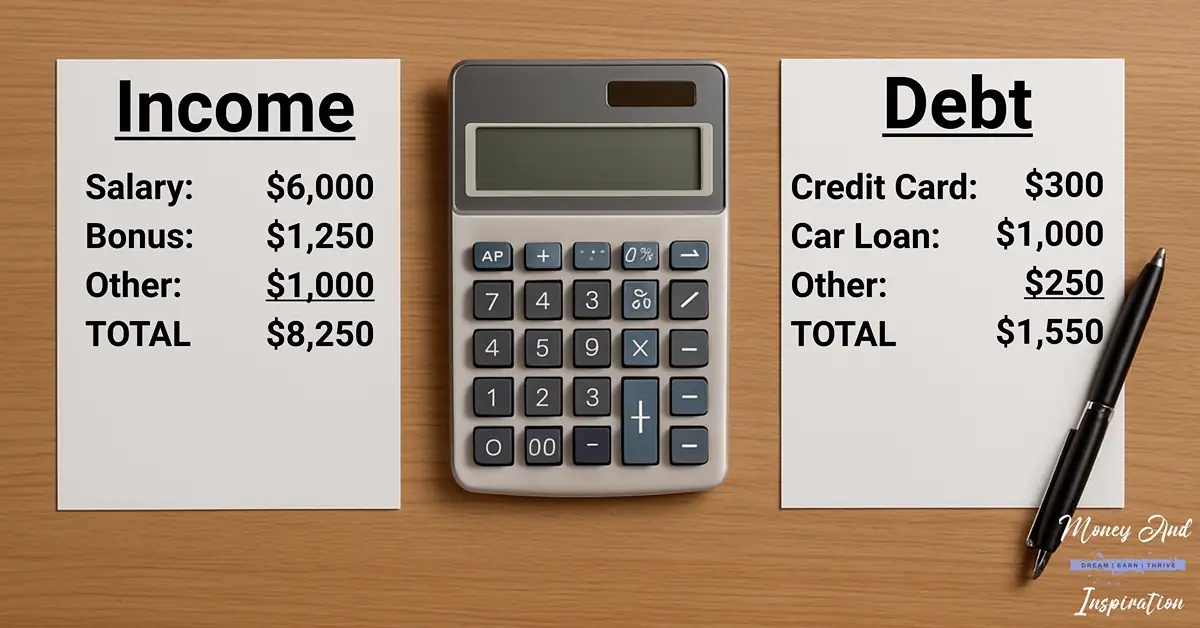
Your debt-to-income ratio compares how much you make each month to how much you owe each month—including your new housing payment.
Your full housing payment typically includes:
- Principal
- Interest
- Property taxes
- Insurance
- Any applicable HOA/POA
- And sometimes PMI (private mortgage insurance)
This full payment is often referred to as PITI.
Most approvals work best when your total monthly debt stays below roughly 45%–50% of your gross monthly income. Lower is always better.
If you are shopping in higher price ranges and need a jumbo loan, the rules become stricter.
Why Understanding This Early Matters
It’s important to understand these basics long before you start shopping for a home.
If you know:
- Where you want to live
- What homes roughly cost
- What your credit looks like
- How much debt you carry
Then you can prepare by:
- Saving for a down payment
- Paying down debt
- Improving your credit score
- Or even increasing your income
Knowledge is power. It never hurts to sit down with a local loan officer and walk through your numbers ahead of time. There is no cost to do that, and I promise you’ll learn something.
If you ever need quick assistance or have questions, feel free to email me or leave a comment for me.
Home Loan Basics – Beginner FAQ
- Do I need 20% down to buy a home?
No. While 20% down helps you avoid private mortgage insurance (PMI), many buyers use programs that allow 3%–5% down, and some government-backed loans go even lower.
- What credit score is needed to buy a home?
There is no single magic number, but generally 620+ works for many conventional loans, FHA loans can go lower, and higher scores mean better interest rates. I promise you are not going to like the interest rate on a conforming loan if your credit score is 620.
- What is PMI?
PMI (Private Mortgage Insurance) is insurance you pay when you don’t put 20% down. It protects the lender—not you—and is usually added to your monthly payment. Note that PMI is priced higher if your credit score is less than desirable.
- What’s the difference between pre-qualified and pre-approved?
Pre-qualified is a quick estimate based on what you tell the lender. Pre-approved means the lender verifies your documents and gives an approval letter you can submit with your offers. This letter will generally detail the amount you are putting down, your credit score, the type of loan you qualify for and the amount of home you are qualified to purchase. Many times, your agent will ask for different letters for different offers. If you are bidding on a $600,000 home, you don’t always want the seller to know you are qualified to go much higher.
- Should I talk to a loan officer before house shopping?
Yes—100%. A quick conversation upfront can save you time, money, and frustration.