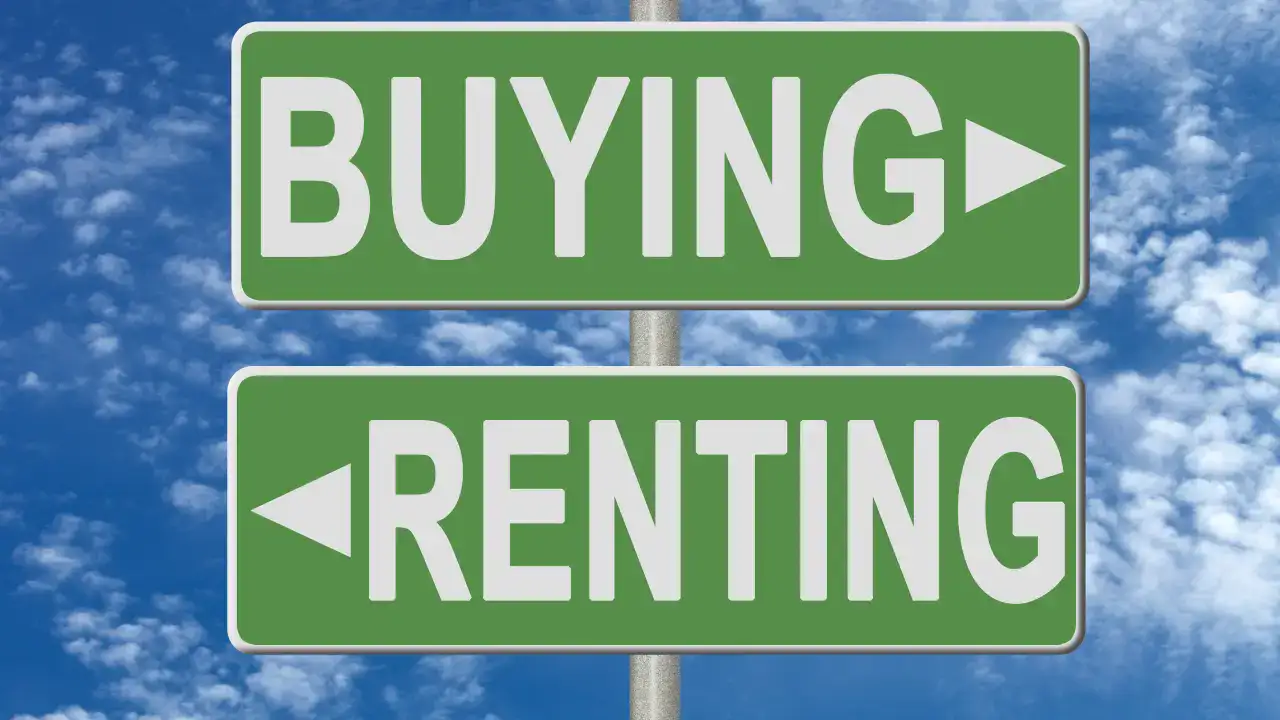
One of the biggest financial decisions most people make is where they will live. Should you rent, or should you buy a home?
Both renting and buying have advantages and disadvantages that will impact your life, lifestyle, and financial future.
The answer is different for everyone. Your career stage, financial situation, mobility needs, and long-term goals all play a role. In this article, I will walk through the obvious pros and cons of renting versus buying, along with some nuances that people often overlook.
Renting vs Buying: Quick Comparison
| Factor | Renting | Buying |
| Upfront Costs | Security deposit and rent | Down payment and closing costs |
| Monthly Costs | Rent payment | Mortgage, taxes, insurance, maintenance |
| Flexibility | Easy to move | Harder to relocate |
| Maintenance | Landlord responsibility | Homeowner responsibility |
| Wealth Building | No equity built | Equity builds over time |
| Stability | Lease dependent | Long-term housing stability |
Renting
Pros
Flexibility
Renting a property allows the flexibility to move without being tied down by a 15- or 30-year mortgage. At certain points in life, renting will serve a purpose and simply make sense.
This is the case if you know you will not be in a location for long, such as during college or a short-term job assignment. Renting can also make sense if you want the freedom to travel or explore different cities without being tied to a specific property. In some cases, people choose to rent in a neighborhood for a period of time before deciding whether they want to buy there.
Lower Upfront Costs
Renting typically requires much less money upfront than buying a home. Most rentals require a security deposit along with the first month’s rent, and sometimes the last month’s rent.
Buying a home requires significantly more cash. FHA loans allow down payments as low as 3.5 percent, but even that amount is usually much larger than what it takes to move into a rental. In addition to the down payment, buyers must also pay loan fees, appraisal costs, property tax prorations, and homeowners insurance. If you’re unfamiliar with how mortgages work, I break down the basics in The Very Basics of a Home Loan.
One important distinction is that rent is simply an expense. A down payment, while a larger cash outlay, becomes equity in the property and remains your money in the form of ownership.
Maintenance and Repairs
One of the benefits of renting is that you are generally not responsible for maintenance. If something breaks, the landlord is responsible for fixing it.
Homeowners, on the other hand, must cover the cost of repairs themselves. Appliances fail, plumbing issues happen, and roofs eventually need replacement.
Potential Amenities
Apartment complexes often include amenities such as pools, gyms, or shared outdoor areas as part of the rent.
When renting a home, the available amenities depend on the property itself. Homes with additional features, such as pools or upgraded outdoor spaces, typically command higher rent.
Potentially Lower Monthly Costs
In some markets, rent can be cheaper than the full cost of homeownership.
Owning a home involves more than just a mortgage payment. The full cost of ownership usually includes property taxes, homeowners insurance, maintenance expenses, and sometimes HOA fees.
However, this is not always the case.
I own a few homes in South Carolina where my total housing cost is actually lower than the rent I collect. That happened because I purchased those properties before home prices increased significantly. If I bought those homes today, the numbers might look very different.
Long term, I strongly believe in homeownership. However, if you must rent and it does cost less on a monthly basis, it recommend trying to set aside some of that savings toward a downpayment on a future home. Saving for a down payment starts with understanding where your money is going. If you need help building that foundation, start with Budgeting 101.
For example, I build a car payment into my budget even when I do not have one. Once my car loan is paid off, I continue setting aside that same amount so the money is available when I eventually need another vehicle.
The same concept works when saving toward a future home purchase.
Cons
Not Building Net Worth
From a long-term perspective, rent payments do not build wealth. Each month the rent goes to the property owner.
The property being rented may increase in value over time, but the renter does not benefit from that appreciation. Since this site is about building net worth over time, renting in the long term will not help accomplish that task.
Limited Control
Renters usually have limited ability to modify the property. Improvements often require landlord approval, and many renters choose not to invest money into changes that benefit someone else’s property.
Rotating Neighbors and Shared Walls
Shared walls can create challenges.
In college, I lived in an apartment with extremely thin walls. My neighbor had a large stereo system against our shared wall, and when he turned it up my kitchen table literally shook.
Even if you start with great neighbors, they may move out and be replaced with someone very different. I owned a townhouse in Marina del Rey with a great family friend sharing one of the walls. She moved on, the new owner rented the unit and I dealt with college kids playing beer pong all night long diving into the walls.
Buying
Pros
Equity and Appreciation
When you own a home, part of every mortgage payment reduces the loan balance. Over time this builds equity in the property.
In addition, real estate has historically appreciated over long periods of time. In the short term there may be fluctuations but you would be hard pressed to find a home down in value over a longer period of time.
Control and Personalization
Homeownership gives you control over the property. You can paint walls, remodel rooms, remove walls, landscape the yard, or make improvements that reflect your preferences.
Predictable Payments
With a fixed-rate mortgage, your monthly payment remains largely stable for 15 or 30 years unless you refinance.
Tax Benefits
Mortgage interest and property taxes may be deductible for homeowners who itemize deductions.
Stability
Owning a home can provide a sense of stability and allow you to establish roots in a neighborhood.
Cons
Higher Upfront Costs
Buying a home requires significantly more cash upfront than renting. Down payments typically range from 3.5 percent to 20 percent depending on the loan program. Beyond the downpayment, there are loan fees, the cost of an appraisal, the cost of your 1st years insurance policy and, usually a proration of property taxes.
Maintenance
Homeowners are responsible for all repairs and maintenance. As a side note, you should budget for repairs and maintenance. Every month set money aside even if no repairs were necessary. They will come and it is less stressful if you know the funds are there. This is recommended whether this is your primary residence or an investment property.
Market Risk
Real estate markets move in cycles, and home values can decline over shorter periods of time. If you only plan to be in a location for a year or two, there is risk your investment will lose value.
Less Flexibility
Owning a home can make relocation more complicated unless you are sitting on a lot of savings allowing you to afford a second property while trying to sell your first one.
Example: Renting for $2,000 vs Buying a $400,000 Home
Let’s walk through a very simple example.
Assume you rent an apartment for $2,000 per month. Over the course of a year, you will spend $24,000 on rent. Over ten years, that adds up to $240,000.
Now assume you purchase a home with the following monthly housing costs:
- Mortgage payment: $2,000
- Property Taxes: $400
- Home Insurance: $100
- Maintenance (estimated): $200
Your total monthly cost would be approximately $2,700 per month, or $32,400 per year.
At first glance, renting appears cheaper. However, part of your mortgage payment is going toward paying down the loan and building equity in the home.
At the same time, the value of the property may increase over time.
After ten years of ownership:
- You may have paid down tens of thousands of dollars of your mortgage balance
- Your home may have increased in value
- Your overall net worth may have increased significantly
When renting, your payments are simply gone. When owning, a portion of your housing cost is helping build your long-term financial position.
Of course, this example assumes you stay in the home long enough for appreciation and principal paydown to work in your favor. If you plan to move within a short period of time, renting may still make more sense.
How Long Should You Stay Before Buying?
One of the most important factors in deciding whether to rent or buy is how long you expect to stay in the property.
Because buying and selling homes involves transaction costs, many financial professionals recommend staying in a home for at least five years before selling.
Common Mistakes People Make When Deciding to Rent or Buy
One mistake people make is focusing only on the monthly payment. Housing decisions should consider long-term financial goals, stability, and lifestyle.
Another mistake is trying to perfectly time the housing market. While markets move in cycles, most people who delay buying while waiting for prices to drop end up missing years of appreciation. I have witnessed this dozens of times.
Finally, some buyers underestimate the true cost of homeownership. Maintenance, repairs, insurance, and property taxes all add to the overall cost and should be part of the decision.
A Financial Mindset to Consider
When people compare renting and buying, they often focus only on the monthly payment.
A better question might be which choice moves you closer to long-term financial security.
For many families, homeownership becomes one of the most reliable ways to build wealth over time.
Frequently Asked Questions
Is renting always cheaper than buying?
Not necessarily. In some markets renting may be cheaper, while in others owning can cost less over time.
Is renting wasting money?
Renting is not necessarily wasted money. It provides flexibility but does not build equity.
What credit score do you need to buy a home?
Many loan programs allow home purchases with credit scores starting around 620.
Conclusion
Renting can make sense at certain stages of life. There is nothing wrong with renting if it helps you stay flexible or gives you time to save.
That said, over the long term I strongly believe in working toward homeownership. Real estate has historically been one of the most reliable ways for everyday families to build wealth.
You do not want to rely entirely on Social Security in retirement. Owning real estate can play an important role in making sure your later years are financially comfortable.
One option many first-time buyers overlook is purchasing a duplex and living in one unit while renting the other. I discuss this strategy in Duplex: The Power of Two.