
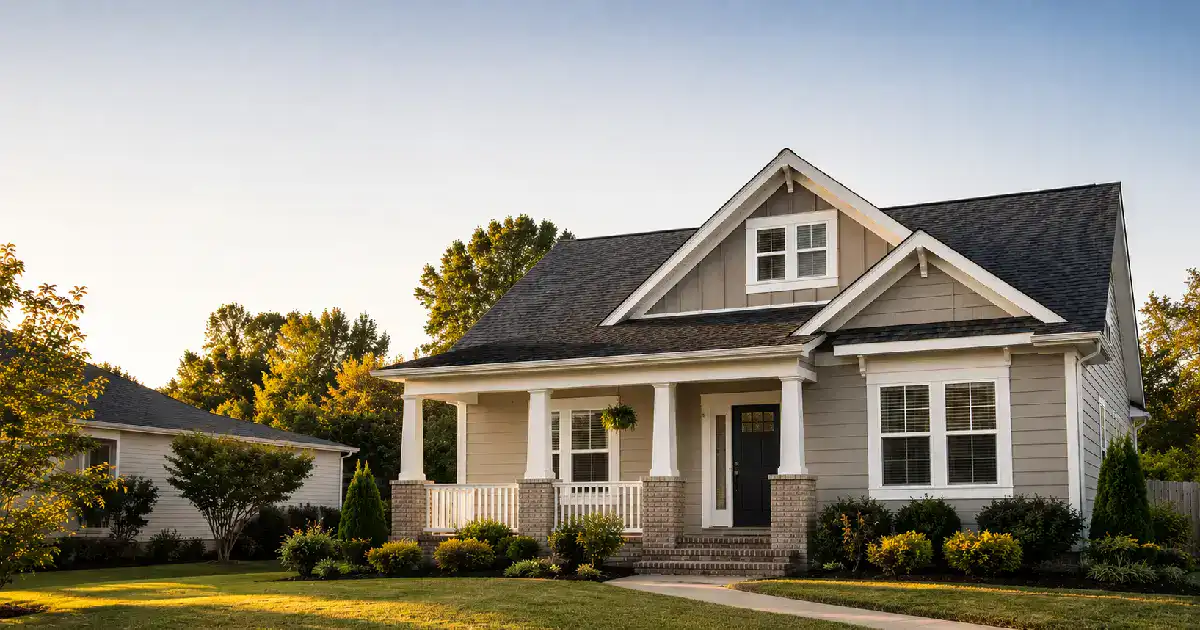
I strongly believe in utilizing investment property to supplement your income and diversify your wealth.
If you do not want to be dependent on Social Security income in retirement, investment property is a great way to lessen that dependency. It can also help diversify your net worth as you work toward retirement as well as provide supplemental income you can use for savings and investing in stocks or other properties.
While perhaps obvious, owning a rental property is not like buying a stock. Buying stock is buying a small piece of another company. A rental property is buying your own small business. It has customers, requires insurance and taxes and needs to be repaired from time to time.
I currently own multiple investment properties in California and South Carolina and have flipped other properties in California with my wife, Crea. We did own one investment property in Detroit, Michigan and, to date (knock on wood), that was our only bad decision. I will write a post about that property in the future in order to share the mistakes we made. My wife would say mistakes I made.
What I will talk about here is the way I evaluate a property. The honest version is that it is more challenging today than when I bought my last investment property. The cost of homes has increased, interest rates are much higher and inflation makes upkeep more expensive. This does not mean investment property is a bad idea, it just means you have to evaluate things differently. Additionally, the path to your first investment property might change. More on this to come.
One more thing to make sure you keep reading. Many people assume qualification is the biggest obstacle on the road to owning investment property, but often it is not. The property’s own income works in your favor when trying to qualify, which is a longer story for a different post. For now, just know that if you qualify for a primary residence, qualification for the investment property is not as difficult as you might think. The down payment and choosing the right property are the biggest challenges. The down payment requires a saving discipline and patience. The right property requires judgment and the right analysis, which we will discuss here.
The cash flow math, simply
Run a rental the way a CFO looks at a business but be careful which report you are reading. What we are doing here is a cash flow analysis, not an income statement, and the difference is the one that can get blurred. On a formal income statement only the interest portion of your mortgage payment is an expense. The principal is not an expense at all. It pays down your loan and lands on the balance sheet as equity. Depreciation, meanwhile, is an expense you never actually pay in cash. So, accounting profit and money in your pocket are two different numbers.
This section is about the second one. Cash in, cash out, and what is actually left in your account at the end of the month. For this cash flow conversation your entire mortgage payment leaves your checking account, principal and interest both, because your bank account does not care that part of it is quietly building your equity. That paydown is real and it matters, but it is not cash flow. It shows up later, when we look at total return.
You have to keep these two concepts separate for now but it does impact how you potentially decide on whether to invest in an investment property. With higher home values along with higher interest rates, today’s market will put more emphasis on building equity and increased property value.
Back to the cash flow conversation.
The full list of what leaves your account is longer than most beginners expect: the mortgage principal and interest, property taxes, insurance, maintenance and repairs, property management if you are not doing it yourself, and any HOA or POA dues. A property with positive cash flow pays you to own it. A property with negative cash flow asks you to pay for the privilege. Both can be the right decision, but you have to know which one you are signing up for, and most people calculate it wrong because they leave out the one line I care about most.
The 10 percent reserve nobody wants to budget for
This is the line that separates the people who keep their properties from the people who sell them in frustration two years in.
Things come up. Always. A water heater dies. A roof gives out after a bad storm. A tenant moves out and leaves you with two months of vacancy plus a turnover that costs real money. None of this is bad luck. It is the ordinary cost of owning a physical building that real people live in.
So I budget 10 percent of the rent, every single month, for maintenance and repairs. Not because something breaks every month, but because something breaks every year, and the only way to be ready for it is to set the money aside before the bill arrives. The roof does not care that you had a good year. The water heater does not check your budget first. If a property only works when nothing ever goes wrong, then the property does not work. Build the reserve into the math from the very first calculation, not as an afterthought you scramble to cover later.
Path one: buying a rental today
Rather than invent a property, let me show you one I actually own. I closed on it in January 2018. Here is what the math looked like then, next to what the exact same house would cost a buyer walking in today. Everything in the left column is real. My loan was $187,425 at 4.375 percent, and my mortgage runs $936 a month. Today that same house is worth about $420,000, and a buyer putting the same 25 percent down would finance $315,000 at 6.625 percent.
| A property I own | When I bought it | Buying it today |
| Price / value today | $249,900 | $420,000 |
| Down payment (25 percent) | $62,475 | $105,000 |
| Interest rate | 4.375 percent | 6.625 percent |
| Market rent | $2,600 | $2,600 |
| Mortgage (principal and interest) | $936 | $2,017 |
| Property taxes | $267 | $267 |
| Insurance | $250 | $250 |
| POA dues | $79 | $79 |
| Landscaping | $100 | $100 |
| Maintenance reserve (10 percent) | $260 | $260 |
| Total monthly costs | $1,892 | $2,973 |
| Monthly cash flow | +$708 | -$373 |
Same house. Same $2,600 rent. Same taxes, insurance and POA, because those follow the house, not the loan. The only two things that moved are the price and the rate, and they moved the property from making about $708 a month to losing about $373. Positive to negative, and I did not have to do anything wrong to get there. I just had to be a buyer in 2026 instead of a buyer back when I bought.
That negative $373 is not a verdict, it is where the analysis begins. This is still a $420,000 asset a tenant is paying down for me, in a house that has already climbed from $249,900 to $420,000. Whether a monthly loss like that is worth carrying is exactly what the two questions later in this post decide. For now, sit with the honest result: at today’s rates, in a normal market, at real rent, a solid rental does not cash flow. That is the actual math of buying in 2026, and it is the part most rental-property content quietly skips. If you want the single-number shorthand for a deal like this, understanding cap rates is the companion post to this one.
There is one more thing the cash flow number hides, and it cuts the other way. That $373 a month adds up to about $4,476 of cash loss over a year. But look at where the money went. In year one, roughly $3,438 of your mortgage payments did not disappear, they paid down your loan and became your equity. So while your checking account is down $4,476, your net worth is only down about $1,000. Remember, this is not money you can spend. It is locked in the house until you sell or refinance, so it is not cash flow and I am not pretending it is. But it is the difference between what the property costs you and what it actually costs your net worth, and that gap is a lot smaller than the monthly number makes it look.
Look at the down payment line too. The same house cost me $62,475 to get into. Today it takes $105,000. The rate gets all the headlines, but the down payment is the wall most first-time investment property buyers actually hit, and it roughly doubled on the same property. This is expected. Inflation is real. Everything in 2026 costs more than it did in 2018. You are likely earning more in 2026 than you were in 2018 as well. This is simply a comparison to show a changing landscape.
Before we go further, hold one number in your head so the next few sections do not read as bad news. That property climbed from $249,900 to about $420,000. That is roughly $170,000 of gain on the property itself, and it would have happened whether the monthly cash flow was positive, negative or dead even. That averages to about $20,000 a year of ownership, though I want to be honest that appreciation never arrives that evenly. Some years are strong, some are flat, some go backward. What I can tell you is that over long stretches of time, real estate has reliably increased in value, and that long view is the real engine we come back to.
The negative $373 is also a snapshot using a 6.625 percent mortgage rate. Rates move, you refinance, and the same property swings back toward positive without you buying anything new. Keep both of those in mind while we work through the hard parts, because the hard parts are real but they are not the whole story.
You may have noticed there is no vacancy line in the table above. That is on purpose, because it is not how I financially account for the time a property will be unoccupied. Instead of budgeting some percentage to account for a vacancy that may or may not come, I build a six month reserve to cover the cost of the PITI (principal, interest, property tax and insurance) along with any HOA/POA. If a bad stretch shows up on my doorstep……or the world’s doorstep as when COVID hit, I have the money set aside to account for that. The 10 percent maintenance reserve stays a monthly cost, because things break on their own schedule. Vacancy is a cushion I plan for, not a bill that I budget for. You are not wrong to model it differently. This is just how I actually run it.
Two small things in that table. The landscaping is $100 a month I choose to cover, and plenty of landlords simply build it into the rent or have the tenant handle it themselves. Also not seen in the chart is the extra $150 a month I put toward principal, because that is a choice, not a cost of owning. It is the same point from a moment ago: money that builds my equity does not belong in a cash flow number. One note for a different post on a different day, because it validates how I think of things: a lender only counts 75 percent of the appraised market rent when you buy, for exactly the reason I hold six months in reserve, because the gap between gross rent and what you actually keep is real.
Why my rentals cash flow and a new buyer’s might not
That table is the whole landscape of today’s market in one property. Look at the mortgage line. The same house costs $936 a month to finance at the 4.375 percent I locked, and $2,017 today at 6.625 percent. That is more than a thousand dollars a month, on the identical house, purely because of when the money was borrowed. My rentals cash flow in large part because I bought when I bought. That is not skill. It is timing, and it is honest to say so.
This is what I did and the framework behind it, not a recommendation. I am not smarter than the person reading this. I am earlier. The properties that cash flow in my portfolio do so in large part because of a rate I cannot get today either. So when an experienced investor tells you rentals always cash flow, ask them when they bought.
I want to take another pause to say there are plenty of solid investment properties out there. My pointing to a changing landscape is just to educate you. Someone that buys today could give this same comparison analysis to you ten years from now.
Path two: the house you already own
There are other paths into owning investment property. We have talked about the changing landscape as prices and rates increase. This is another version I am contemplating right now, and a really good option for those already owning a primary residence, specifically if you own that property at a lower interest rate and are considering a move.
I bought my own home for around $780,000. It is worth close to double that today. My rate is 2.625 percent, locked in a window created by COVID that is hopefully never to return. If I tried to buy that same house today as a rental at today’s rates, the numbers would be brutal, the same problem I presented above. But I do not have to buy it. I already own it.
Crea and I are thinking about moving somewhere with more room and a lower cost of living. If we do, I have two strong paths. Since we owe far less than the home is worth, we could sell it and buy somewhere else with cash, leaving money left over to aid retirement. That was always our plan, but this second option is really worth considering. It involves keeping this house and converting it to a rental instead of selling it. Here is what that looks like.
| Converting a home you already own (my numbers) | Per month |
| Market rent | $7,000 to $8,000 |
| Mortgage (principal and interest, at 2.625 percent) | $1,750 |
| Property taxes | $1,000 |
| Insurance | $250 |
| Maintenance and repair reserve (10 percent) | about $750 |
| Monthly cash flow | about +$3,300 to +$4,200 |
Read that against path one. The same market that hands a new buyer a $373 monthly loss hands me a few thousand a month in positive cash flow. Nothing about the house changed. The only difference is the path. I am not buying a rental. I am converting one I already own at a rate nobody can get today, and using the income to help carry the primary residence I buy next. Equity builds in two houses at once.
A fair question here is where the down payment for the next primary residence comes from. If you are reading this, you very likely already have it, you came looking for an investment property, which means you have been saving for exactly this. The good news is a primary residence does not require anywhere near the 25 percent an investment purchase does, so that money stretches further than you think. And if you want to keep more cash on hand, you can borrow against the equity in the home you are converting with a HELOC, though that means taking on a second payment at today’s higher rates, so weigh it honestly.
Funding aside, this is the version of this strategy almost nobody talks about, and at today’s rates it may be the most realistic path to a rental that actually pays you. If you already own a home with a low locked rate, the question is not only whether to go buy a rental. It is whether the rental you want is the house you are already standing in.
There is a tax side to converting a home you have lived in. The primary-residence gain exclusion, second-home rules, 1031 exchanges. It is genuinely its own subject and it heads in several directions at once, so it deserves its own post rather than a rushed paragraph here. For now, just know the decision to convert carries a tax dimension worth planning before you make the move, not after.
There is a cousin to this strategy worth knowing, and it is the one I most wish I had used when I was younger. Buy a duplex, live in one unit and rent the other. Because you live there, you qualify at a primary-residence rate even though half the property is a rental from day one. It is probably not your dream home, but after a few years you move out, rent the side you were living in, and the whole thing becomes an investment property you got into on the easiest possible terms. I wrote about that one separately in the power of two.
Appreciation versus cash flow, and why geography changes everything
Whichever path you are on, a property makes money two ways. The rent it throws off, and the value it builds over time. Many writers focus on cash flow because it is an easier topic tied to the math. Appreciation is a more challenging topic. Different markets and locations appreciate at different rates. This is true looking at shorter time periods and it is certainly true looking at durations of at least a decade.
The fact is, markets do not move together. In any given year some areas climb while others fall, and the gap between the best and the worst can be significant. Look at a recent snapshot from the 50 largest metropolitan cities, per Redfin.
| Median sale price, year-over-year change (Redfin, 2026) | 1-year change |
| Strongest metros | |
| Pittsburgh, PA | +9.1 percent |
| San Francisco, CA | +8.2 percent |
| West Palm Beach, FL | +7.7 percent |
| Philadelphia, PA | +7.6 percent |
| Chicago, IL | +6.0 percent |
| Weakest metros | |
| San Jose, CA | -5.6 percent |
| Seattle, WA | -4.5 percent |
| Miami, FL | -1.3 percent |
| Dallas, TX | -1.2 percent |
| Riverside, CA | -0.6 percent |
Year-over-year change in median sale price across the 50 most populous metros, as of 2026. Source: Redfin. Because these rankings shift from month to month, check the current version at redfin.com/us-housing-market.
That is a spread of nearly 15 points across one country in a single year, the leader up around 9 percent while the weakest is down more than 5. Same nation, same year, opposite outcomes. It means the appreciation math you assume in one place can be flat wrong in another.
It gets more interesting, because the pattern does not even hold steady with a market’s own reputation. Expensive coastal California has been one of the great long-run appreciators for decades, yet in this particular (short-term) market several of those metros are flat or falling while more affordable, steadier metros lead the pack.
Focus on the differences in the chart above, not the specific cities, because the names change month to month. What does not change is the lesson. You cannot buy a property on last decade’s reputation or on one national headline. You have to look at the specific market you are buying in, right now, and be honest about what it actually supports.
There are good free tools for exactly this. Zillow and Redfin both let you check the recent price trend for any city or ZIP code in a couple of minutes, and it is worth doing before you fall in love with a property. The house is only half the decision. The market it sits in is the other half, but let me caveat this statement. What you see for a market today is not an indication of what will happen over the next decade. History shows that over extended periods of time, prices will rise. If you are in for the long haul, your gain will vary by region but you have a high probability of appreciation over a 10-year period.
A writer who has only ever owned in one kind of market will tell you their rules are the rules. They are not lying to you. They are just describing their own experience.
Why a monthly loss can still be worth it
Here it is. A property that loses money every month can still be the right buy.
Two conditions have to hold. You can comfortably carry the monthly deficit without straining the rest of your life, and you have to be okay with the market you are purchasing in. Take the path-one property above that loses $373 per month. That payment is lower than most car payments, but it is building something for you. Even at 3 percent appreciation it gains about $12,600 in value in year one on a $420,000 asset, plus a few thousand more in principal your tenant pays down for you. Net of everything, you are well ahead, even though the checking account says you are behind $373 every month.
That car is a depreciating asset. This home is building real net worth. By all means, if you need a car, buy one. I am not trying to police your life. I use this as an example because my very first rental property was a redirection from buying a car for myself I really did not need.
Many personal finance writers treat any negative cash flow as a red flag. I understand why. It is the safe thing to say, and it protects beginners from buying a money pit they cannot afford. But it is not the whole truth, and at today’s rates it would rule out almost every property in some markets. The discipline is not avoiding negative cash flow. The discipline is knowing which negative cash flow you can carry and why.
Two questions to ask yourself
Before I buy anything, I ask two questions. They sound simple. They are not.
The first question: what is my cash flow if rents drop 10 percent? Not the rent the listing assumes. The rent in a softer market with a tougher tenant pool. If a property already loses $373 a month at $2,600 rent, what does it lose at $2,340? The reserve shrinks a little with the rent, but the mortgage does not, so the loss deepens past $600. If that is a number you cannot cover for a year or two, the deal was never as strong as it looked.
Another way to look at this is to be conservative with your math. If you really want a property, your mind can err on the wrong side trying to justify the purchase. It does for me at least. Be conservative with appreciation and increases in rental income, and do not use less than 10 percent for repairs and maintenance. If you can survive the most conservative of estimates, you are likely just fine.
The second question: how long will I really hold this? This is the honest replacement for trying to forecast appreciation, which almost nobody does well, and which I did not even attempt before I bought in Bluffton. Over a long hold, ten years or more, real estate in the large majority of markets and periods has held or grown its value. So the real question is not whether a market is hot or flat this year. It is whether you will own the property long enough for time to do its work.
If you are holding for a decade, a flat market today barely matters. If you might sell in two or three years, a rental may not be worth the trouble at all, because market dips and lumpy repair years both hit hardest on short horizons and only average out with time. Be honest about your timeline, because your timeline, more than any forecast, decides whether a monthly loss is a bridge or a trap.
Notice what those two questions do together. The first protects you on the downside. The second forces you to be honest about how long you will stay, which is what actually protects you when a market is flat. In a low rate world a property could pass on cash flow alone. At today’s rates, most new purchases only make sense if you are genuinely in it for the long haul. That is the real shift, and it is why this framework matters more now, not less.
When to walk away
The same path-one property with a $373 monthly loss is either a walk-away or a courage buy, and that decision is up to you and your financial situation. Only you can make the decision.
If the answer is wrong on both questions, walking away is likely, and more easily, the right move. If you cannot spare a monthly loss and your ownership could be short-lived, there is great risk in taking on a mortgage.
I should also say, a third unspoken rule can come into play. Maybe the math works. Maybe you plan to own for many years. Your gut may still tell you to pass on the property, and sometimes you really have to trust your gut. I have been here before. Something felt wrong. I got a bad feeling about the seller. I walked away……and I never looked back.
Two rules follow from that:
• Do not talk yourself into changing the math. If the only way a deal turns green is by leaving out the reserve, move on. If you have to pretend nothing will ever break to make the numbers work and your finances do not allow for a loss, trust you will find another property.
• Do not let a strong appreciation story alter your decision. If you cannot take a loss, and this property produces a loss, ignore the appreciation unless something changes with your finances, for example you know you are receiving a raise in the near future.
There is no shortage of properties. There is a shortage of good ones bought with honest math. Patience is a position too, and at today’s rates it may be the most profitable one.
One more thing, since it is the question I get most. The qualifying side of all this, how the bank credits 75 percent of the appraised market rent toward your approval and how newer DSCR loans let the property’s own income qualify you rather than your paycheck, is its own subject. DSCR loans did not even exist in their current form when I was writing loans. That post is coming to the Investment Property section. This one stays on the part that decides whether the loan was worth getting in the first place: the math on the property itself.
Why this is still worth doing
If you have read this far and concluded that investment property is a bad idea in 2026, I have led you astray, because that is not what I believe and it is not what the numbers say. Buying today is harder. The math is different. But different is not bad, and I want to be clear about why I still put my own money here after five properties and today’s rates both.
Start with the appreciation, because it is where the money actually lives. My property went from $249,900 when I closed in January 2018 to about $420,000 today, roughly $170,000 of gain in about eight years. That gain would have happened even if the property had only ever broken even month to month. I will be honest that some of it came from the 2020 to 2022 market, when values jumped almost everywhere, so I am not claiming every property compounds this fast. But the direction is the point, and for a long stretch that direction has been up.
That $170,000 is also a South Carolina number. A higher-appreciation market like Los Angeles would have gained more in raw dollars over the same years, though it would have cost far more to buy into and far more to carry, which is the geography tradeoff the post already walked through.
Cash flow is the part everyone stares at because it moves every month, but over the years it is usually the smallest number in the story. The asset getting more valuable while a tenant pays it down is the big one. I would take break-even cash flow and strong appreciation over strong cash flow and a flat market almost every time.
Then remember the rate is temporary. Today’s negative $373 exists because money costs 6.625 percent right now. Rates fall and rise in cycles, and when they fall you refinance, and that same property moves back toward positive on its own. There is an old line that you marry the house and date the rate, and it is true. You are buying an asset you keep for decades and a rate you can change in a few years. Buying now also locks in today’s price before the next low-rate stretch pulls prices higher, which is its own kind of timing.
And the whole time, someone else is buying the asset for you. Every payment your tenant makes chips down your loan and hands you a little more equity. That is the quiet magic of this whole thing, and it does not care what the cash flow line says in any given month.
None of this is a promise. Appreciation is real and historically reliable, but it is not guaranteed, and it does not arrive evenly or on schedule. The entire case rests on being able to carry the monthly gap (if applicable) while the slower forces do their work. That is the honest version. Investment property is still one of the best ways I know to build and diversify wealth and to lean less on Social Security someday. The math being harder today is a reason to be careful. It is not a reason to stay out.
One post cannot hold all of this
I want to be honest about the size of what we just did. I showed you how to evaluate one thing, a long-term rental you buy and hold. That is the foundation, and it is the right place to start, but it is one piece to a very large puzzle, and I would be doing you a disservice to pretend otherwise.
Where you buy changes everything, and the geography section only opened that door. Rent control can rewrite the math in some cities before you ever close, capping what you can raise rents to for years. Section 8 tenants bring rent that is largely guaranteed by the government along with a different set of rules and inspections and tradeoffs, and reasonable investors disagree about it. Flipping is not really investing at all, it is closer to a job, a topic all its own. Short-term rentals can earn far more than a long-term lease and demand far more of your time, and a growing list of towns is regulating them out of existence. Each of these could be its own post, and some of them will be.
The point is not that you now know everything about investing in real estate. Nobody does, and anyone selling you that in one post is selling you something. The point is that you know how to run the core math now. Take that with you. It works the same whether you walk into a rent-controlled building, a Section 8 lease, a flip or a beach rental. Learn the foundation first.
Conclusion
Here is the last thing. Run the honest math on every deal, especially the ones that look great on paper. A good-looking deal and a good deal are not always the same thing, and the only way to tell them apart is to put every cost in and see what survives. The exciting deals are often exciting because somebody left a cost out of the math. The boring-looking one that still pencils with the reserve included, the rent-drop tested and a holding period you can actually commit to, that is the one worth owning.
Run the numbers with every cost in them. Ask the two questions. Be honest about the answers, especially the answers you do not want to hear. And look at the house you already own before you assume the only path is buying a new one. The deal that survives all of that is the one worth owning, and the reward for owning it patiently is the kind of wealth that does not show up in a monthly cash flow line at all……
The math is harder today than it was when I started. It is not too hard. Do it carefully, carry what you can carry, give it time, and investment property will do for you what it has done for my family. That is a promise the numbers actually keep.
Start with the math. Stay honest about the costs. Give the property time to work.
Cheers!
Christopher



Weekly Notes — October 10, 2026